
Connect with me at CMMedia, PopPassport, Age Box Ventures, Linkedin, Instagram, TikTok
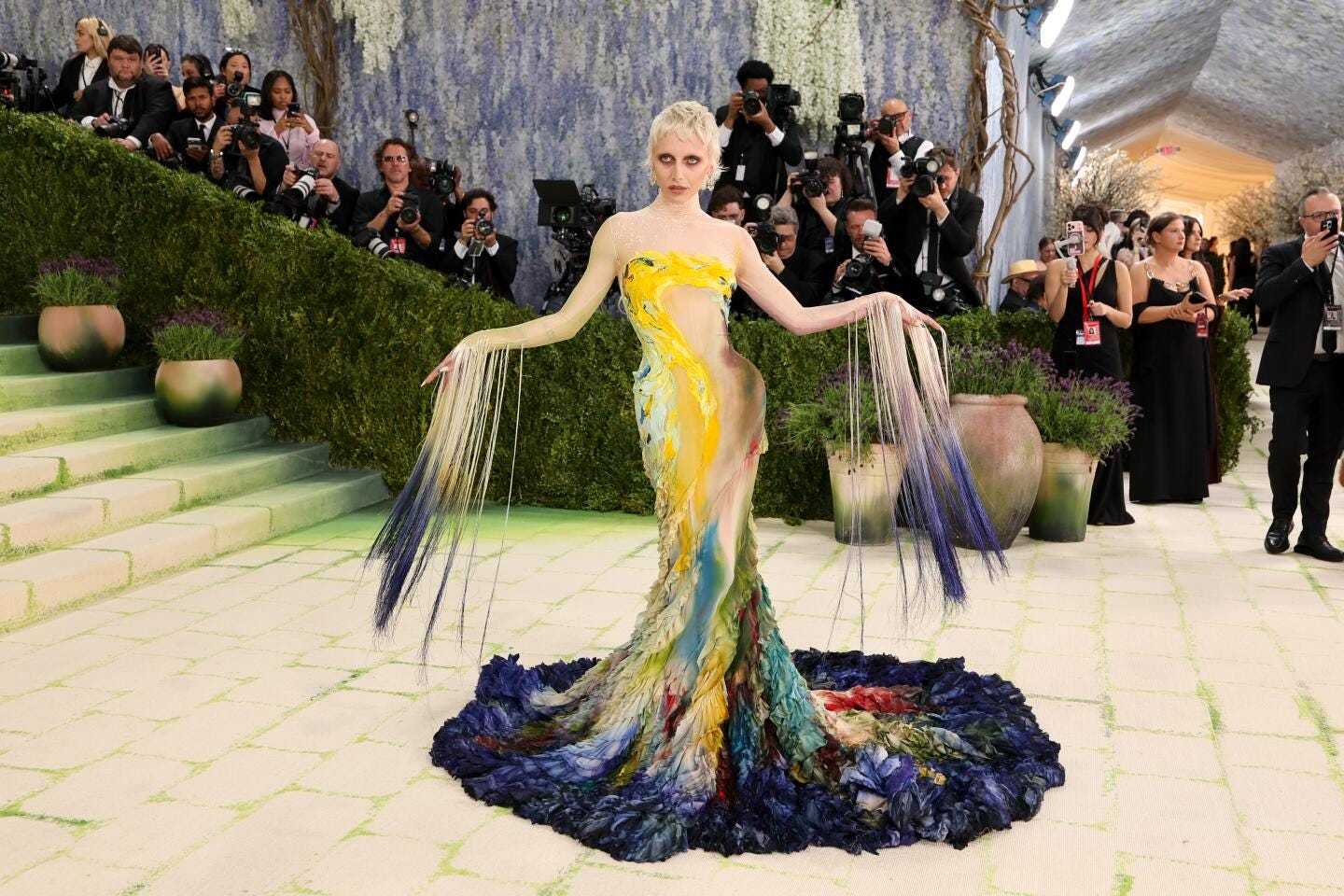
Every year, the steps of Metropolitan Museum of Art transform into something between a red carpet, a stage set, and a global mood board. The Met Gala isn’t just fashion’s biggest night - it’s one of the most mythologized locations in modern pop culture and raise money for the Costume Institute. However, in recent years the tide has changed into “Hunger Game” vibes according to the internet, and having the ridiculous Bezos duo as this year’s sponsors left a bitter taste for everyone who felt it was incredibly tacky and tone-deaf. How does it proceed?
A Brief History
Established in 1948 by fashion publicist Eleanor Lambert, the Met Gala began as a modest midnight dinner to raise funds for the Metropolitan Museum of Art’s newly founded Costume Institute. Originally a local high-society affair with tickets costing just $50, it has since evolved into the world's premier, celebrity-studded fashion event. Vogue’s involvement began in 1972 when former editor-in-chief Diana Vreeland joined the Met’s Costume Institute as a special consultant. She transformed the event from a local society dinner into an elaborate, celebrity-filled affair with exhibition-linked themes, before Vogue Editor-in-Chief Anna Wintour took over as chairwoman of the gala in 1995.
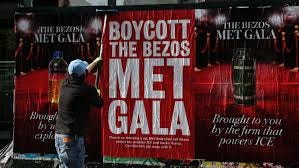
Multiple protest ground, including EveryoneHatesElon, created posters & stunts around NYC
Met Gala Vogue at a crossroads x Bezos Controversy
It may speak to the tone-deafness of internal Vogue that no one marked the Bezos involvement this year as a really bad idea, and in really bad taste. People at first thought it was a ridiculous rumor until the dup started appearing at fashion week shows early this year with Anna (boo). Surely one of the most-hated billionaires on the planet, actively cutting thousands of jobs and funding detestable policies, many called for event boycotts this year and it seemed some did so. While some stated it was money for a good cause, the endowment the institute has is already quite sizable - and if Billionaires actually paid their taxes, it would offer far more than their sponsorship. Many outlets, including the New York Times, covered the wide-spread backlash in great detail largely driven by tech magnate involvement and wealth inequality. Of all the choices, this was a huge fail and rather embarrassing for this year’s co-chairs - Beyonce, Nicole Kidman, and Venus Williams - not to mention an absurdly (paid) fluff piece on Lauren Sánchez Bezos in the NYT.
Devil Wears Prada 2 Marketing Integration
Caught in the middle of this was the marketing campaign for The Devil Wears Prada 2, which Disney orchestrated as a $250 million collaborative marketing rollout that blurred the line between cinematic fiction and fashion reality. The centerpiece was an unprecedented editorial crossover that cast Meryl Streep (as Miranda Priestly) alongside the real-life Vogue editor, Anna Wintour, for the May 2026 cover of American (Though please note, that our Queen Ms. Streep did NOT attend the Gala, unlike her character in the first film). The partnership transcended a traditional magazine spread through deep, cultural world-building:
The Vogue Cover Story: The real-life fashion icon and the fictional “mean boss” shared a historic cover and a joint interview. It served as a power-play to legitimize the film within the rigid ranks of the global fashion industry.
Fashion Week Interruptions: The campaign placed 10 “Miranda Priestly” lookalikes in the front row of real-world runway shows (including Rio Fashion Week) to generate viral, street-level disruptions.
Real-World Advertorials: Vogue produced supplementary features tying into the movie’s universe, highlighting how the film’s events compared to the high-pressure environment of the real-life publication.
Runway-Inspired Retail: Vogue editors styled limited-edition capsule collections—like a 14-piece Devil Wears Prada line by Lulus—while movie chains like AMC offered merchandise designed to look like high-end designer bags.
Ecosystem Sponsorships: Other major luxury and lifestyle players integrated the film’s IP directly into their own campaigns, including Vogue features with global ambassadors for brands like Lancôme, Mercedes-Maybach, and L’Oréal
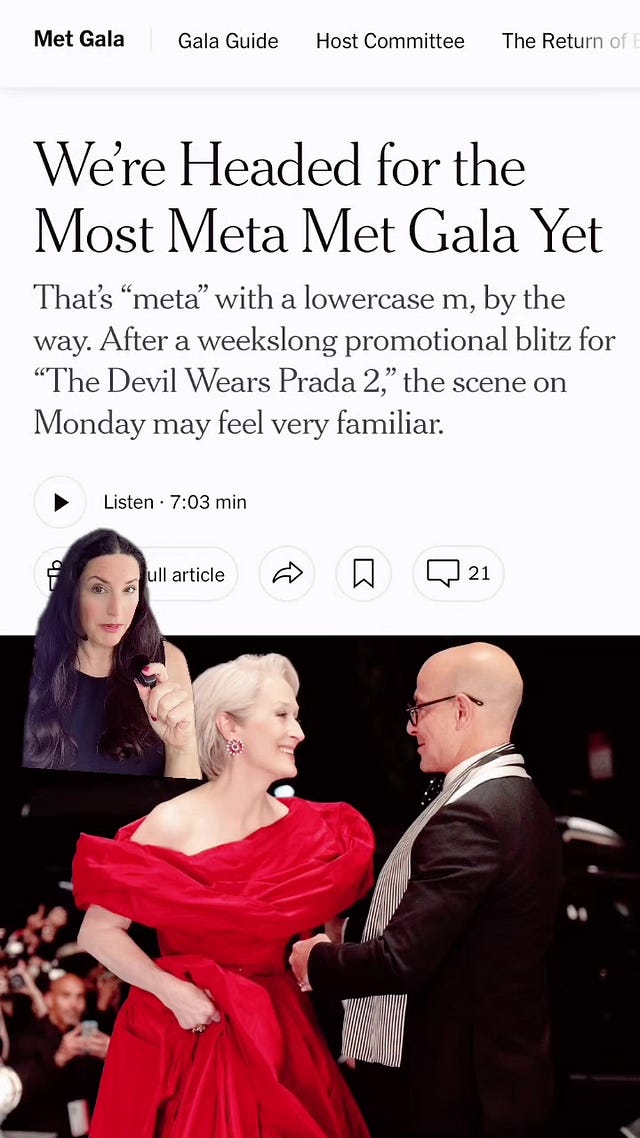
Watch my TikTok overview on it all
 Tiktok failed to load.
Enable 3rd party cookies or use another browser